

Phytoremediation 101: A Beginner’s Guide to Eco-Friendly Remediation
As environmental challenges mount, scientists and communities alike are turning to a surprisingly simple solution: plants. In the world of environmental cleanup, phytoremediation is emerging as a powerful, natural method for decontaminating polluted soil and water—using nothing more than the right kinds of greenery. But how does it work, and where is it already making a difference? Let’s dig in.
🌿 What Is Phytoremediation?
Phytoremediation is the process of using plants to remove, degrade, or stabilize contaminants in soil, water, and even air. Certain plant species, called hyperaccumulators, have evolved the ability to absorb and store harmful pollutants such as heavy metals, petroleum hydrocarbons, pesticides, and even radioactive elements.
This eco-friendly technique is particularly attractive because it's:
-
Low-cost compared to traditional remediation
-
Visually appealing and non-disruptive
-
Renewable and sustainable
-
Capable of restoring ecosystems over time
🌱 Types of Phytoremediation
There are several ways plants can remediate contaminated environments:
-
Phytoextraction: Plants absorb contaminants (like lead, arsenic, or cadmium) through their roots and store them in stems or leaves.
-
Phytostabilization: Plants reduce the mobility of contaminants in soil, preventing them from spreading through erosion or groundwater.
-
Phytodegradation (or phytotransformation): Plants break down organic pollutants (like solvents or pesticides) into less harmful substances.
-
Phytovolatilization: Plants absorb pollutants and release them into the atmosphere in a modified, less harmful form.
-
Rhizofiltration: Plant roots (often aquatic) absorb or adsorb pollutants from water, including wastewater or runoff.
🌍 Real-World Case Studies in Phytoremediation
1. Sunflowers at Chernobyl (Ukraine)
After the 1986 nuclear disaster, scientists planted sunflowers in contaminated ponds near the Chernobyl site. These plants absorbed radioisotopes like cesium-137 and strontium-90 from the water, significantly reducing toxicity levels. The success of this approach highlighted how even radioactive contaminants could be managed using flora.
2. Indian Mustard in California (USA)
In agricultural areas of California’s Central Valley, fields contaminated by lead and selenium were restored using Indian mustard (Brassica juncea). The plants absorbed the metals through their roots and stored them in above-ground parts, allowing for safe harvesting and disposal.
3. Poplar Trees and Groundwater Cleanup in Oregon (USA)
In Portland, Oregon, hybrid poplar trees were used to clean a former industrial site where groundwater was contaminated with trichloroethylene (TCE), a toxic solvent. The trees absorbed the chemical and broke it down through enzymatic processes—acting like a natural water filtration system.
4. Vetiver Grass for Oil Spills (Africa & Southeast Asia)
In regions affected by petroleum spills, including parts of Nigeria and Thailand, vetiver grass has been planted to help stabilize the soil and degrade oil-related compounds. Its deep roots also prevent erosion, adding a layer of environmental protection.
🧪 How to Choose the Right Plants
Successful phytoremediation depends on matching the right plant to the right pollutant and site conditions. Factors to consider include:
-
Type of contaminant (metal, organic, radioactive)
-
Soil pH and composition
-
Climate and water availability
-
Root depth and growth rate of the plant
-
Risk of invasive behavior
Common phytoremediators include:
-
Sunflowers (Helianthus annuus) – for heavy metals
-
Indian Mustard (Brassica juncea) – for lead, cadmium, selenium
-
Poplar Trees (Populus spp.) – for organic solvents and nitrates
-
Water Hyacinths (Eichhornia crassipes) – for polluted water bodies
-
Alfalfa (Medicago sativa) – for petroleum hydrocarbons
🌎 Advantages of Phytoremediation
-
Cost-effective: Often 50–80% cheaper than conventional cleanup methods
-
Minimal site disruption: No need for excavation or heavy machinery
-
Ecologically beneficial: Encourages biodiversity and restores soil health
-
Public acceptance: Green spaces are more welcomed than industrial clean-up rigs
⚠️ Limitations to Consider
-
Time: Phytoremediation is slower and may take multiple growing seasons
-
Depth: It’s most effective in shallow soil or groundwater zones
-
Plant disposal: Contaminated biomass must be safely managed
-
Not universal: Doesn’t work well for every pollutant or heavily contaminated site
🌿 Final Thoughts
Phytoremediation isn’t just a niche green tech—it’s a viable, proven strategy for cleaning up our planet, especially in areas where traditional methods are too costly or invasive. As climate change and pollution challenges grow, these natural allies in the plant kingdom are becoming indispensable tools for a cleaner, healthier future.
Whether you’re a landowner, a policymaker, or just someone passionate about sustainability, understanding and advocating for phytoremediation can play a part in healing the Earth—one root at a time.
Phytoremediation Conferences in 2026/2027/2028
Edan Related Articles
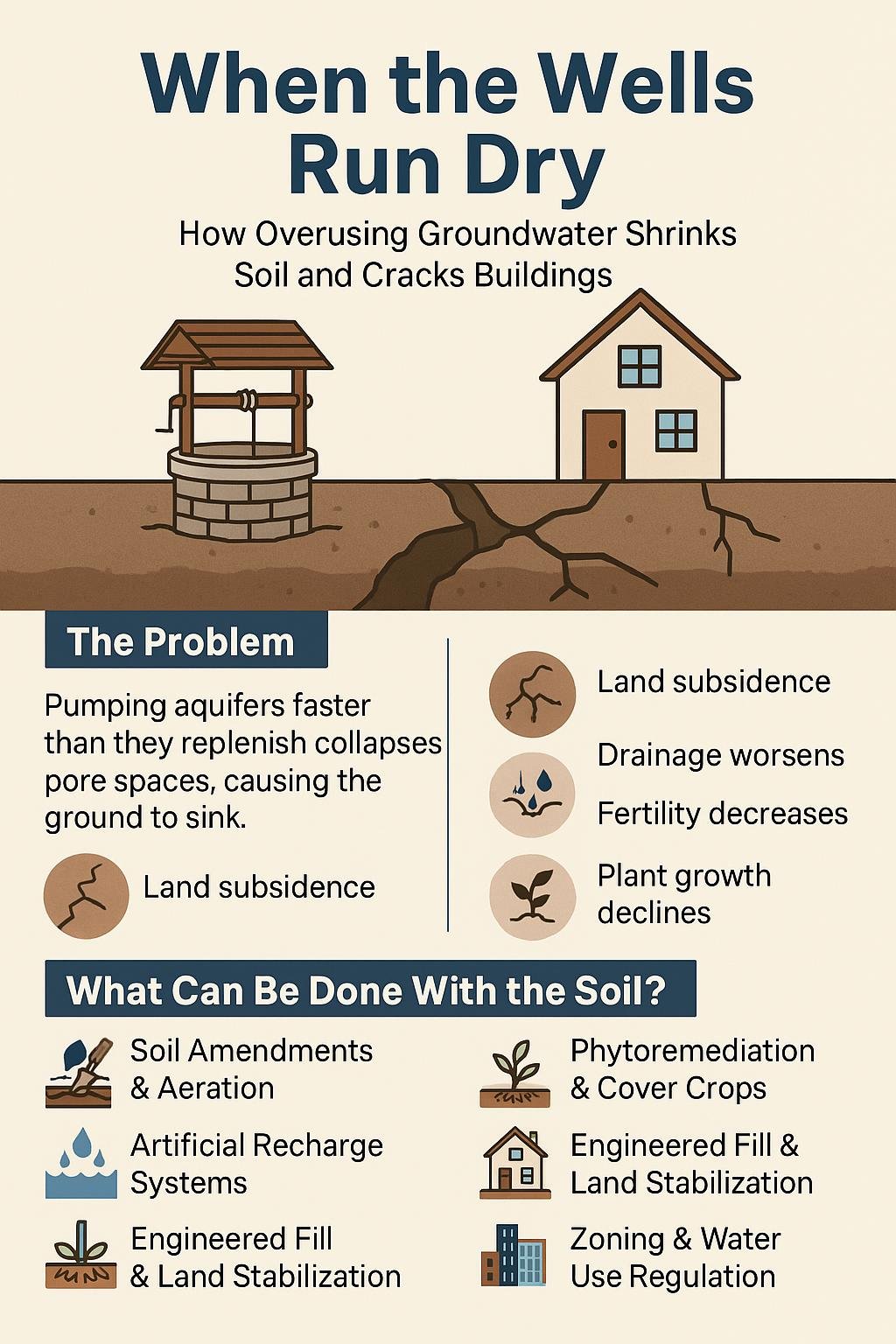
When the Wells Run Dry: How Overuse of Groundwater Shrinks Soil and Cracks Buildings—And What Can Be Done About It
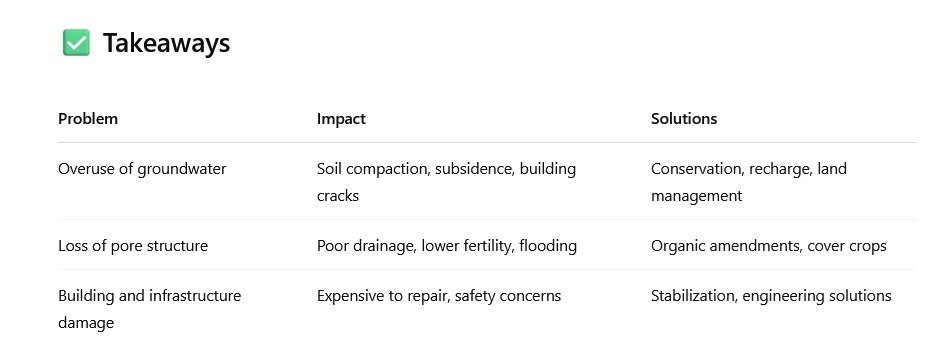
Water is life—but when overused, it can also lead to destruction beneath our feet. Across the globe, the over-extraction of groundwater from wells is causing more than just empty aquifers. It’s leading to soil compaction, land subsidence, and even cracks in buildings, roads, and critical infrastructure.
This growing crisis affects both rural and urban areas and calls for urgent attention. In this article, we’ll explore how groundwater depletion shrinks soil, damages property, and what strategies can be used to restore or stabilize the land once the water is gone.
💧 The Problem: Groundwater Overuse and Soil Collapse
When water is pumped out of underground aquifers faster than it can be replenished, pore spaces in the soil begin to collapse. These voids once filled with water provide structure and buoyancy. Without water, fine-grained soils like clay and silt compress and settle.
This process leads to a phenomenon called land subsidence—the gradual sinking of the Earth's surface. It’s not just a theoretical concern:
-
In California's Central Valley, parts of the land have sunk over 30 feet in the past century.
-
In Jakarta, buildings tilt and roads crack as groundwater is depleted.
-
In Arizona, entire subdivisions experience foundation damage as the land beneath them contracts.
🧱 Cracks in Buildings and Infrastructure
The consequences aren’t limited to the environment—they hit close to home:
-
Foundations crack as soil shrinks and settles unevenly.
-
Walls separate, creating gaps around doors and windows.
-
Pavement buckles, damaging roads and pipelines.
-
Wells themselves become unusable, as the water table drops below the reach of existing pumps.
These effects are often irreversible and can be very costly to repair—not just for homeowners, but for entire communities.
🌍 What Happens to Soil When the Water Runs Out?
Once groundwater is depleted, soil structure is permanently changed:
-
It compacts, becoming denser and less capable of holding moisture.
-
Soil fertility decreases, impacting agriculture.
-
Drainage worsens, increasing flood risk during storms.
-
Plant growth declines, due to reduced root aeration and harder layers near the surface.
In many cases, recharging the aquifer doesn’t bring the soil back to its original state. The damage is done.
🛠️ What Can Be Done With the Soil After Groundwater Depletion?
While soil recovery is difficult, it’s not impossible. Here are strategies to manage or rehabilitate affected areas:
1. Soil Amendments and Aeration
-
Biochar, compost, and gypsum can improve structure and restore porosity.
-
Deep tilling or mechanical aeration can break up compacted layers (though care must be taken not to damage soil health further).
2. Phytoremediation and Cover Crops
-
Planting deep-rooted species like vetiver, switchgrass, or alfalfa can help open up compacted soils.
-
Cover crops such as clover or rye add organic matter and improve water retention.
-
Over time, these methods can rebuild soil health and fertility.
3. Artificial Recharge Systems
-
Constructing infiltration basins, recharge wells, or check dams can help capture rainfall and guide it back into the aquifer.
-
This works best when combined with soil rehabilitation strategies to enhance percolation.
4. Engineered Fill and Land Stabilization
-
In areas where buildings are damaged or future development is planned, engineered fill (such as geotextile layers or compacted gravel) may be necessary to create a stable base.
-
Soil grouting and slab jacking can lift and stabilize existing structures.
5. Zoning and Water Use Regulation
-
The best fix is prevention. Limiting groundwater extraction, monitoring well use, and enforcing sustainable water policies are key.
-
Smart urban planning can prevent development in high-risk areas.
🌱 Community Action and Long-Term Recovery
Soil shrinkage and structural damage are not isolated problems. They affect:
-
Homeowners
-
Farmers
-
Municipal planners
-
Engineers
-
Environmentalists
Solutions require collaboration across sectors:
-
Public education on water conservation and groundwater risks
-
Incentives for soil restoration or xeriscaping
-
Monitoring systems that track land movement and groundwater levels
-
Funding for remediation in subsiding communities
🧭 Final Thoughts
As groundwater becomes scarcer, the hidden costs beneath our feet begin to surface—literally. Land that once supported homes, farms, and communities is shrinking, cracking, and collapsing.
But there is hope. Through restorative soil practices, smarter water use, and proactive planning, we can protect our foundation—both in the ground and in society.